
Definition
Ice age is a time temperature drop during long periods in the earth's climate, causing an increase in the breadth of ice in the polar regions and mountain glaciers. Geologically, the ice age is often used to refer to the time the ice sheet in northern and southern hemisphere; with this denifisi we are still in an ice age. In laymen, and to over 4 million years kebelakangan, the definition of an ice age is used to refer to a colder period with extensive ice cover in the entire continent of North America and Europe.
The cause of the ice age one of which is due to the aerosol cooling process that often befall the planet. The eruption of Krakatoa is one such example on a small scale while one of the dinosaur extinction theory (Chicxulub collision) is one example of a large scale.
Last Ice Age
In terms of the angle of view of the above, the last ice age began about 20,000 years ago and ended about 10,000 years ago or in the early Holocene time (late Pleistocene). The process of melting ice in this age is relatively old and some experts proved this process ended about 6,000 years ago.
Ice Age in the archipelago
When the ice age, surface sea water is much lower than now, because a lot of frozen water in polar regions. At that time the South China Sea is dry, so the western archipelago joined with mainland Southeast Asia. Meanwhile, the Papua New Guinea is also affiliated with the Australian continent. After the events of melting ice, the wave of human migration to the archipelago started happening.
Generator
Jumat, 14 Januari 2011

Development History
There are many continents are known up to now there is some type or types which are well known continent.
There is a continent that is currently there and was really there, and there is a presence in the past because the movement of continental crusts, also there are currently only as history. It also includes the continents and there are myths in khalayan only. Diataranya .... continent of Atlantis!
It is interesting to know the continents, both for learning geography, history, even for a fairytale
Model continent, there are 4 to 7 continents.
Continent or continent is a vast land. Often a single continental land mass known as the continent because it has special characteristics. Because of differences in these traits both geography and geology, the division of the continent in this world there is mention 4 continents there is mention 7-continent benuaBenua existing even this number could vary depending everywhere are grouped.


Pangaea or Pangea (pan means all, whole and Gaia means Earth in Ancient Greek) is a huge supercontinent in Paleozoic and Mesozoic age of about 250-225 million years ago, before it finally splits or splits into several pieces of continents or plates and then spread to the entire surface of the earth.
Many theories explaining the "gathering" back these continents after previous adrift. The theory of plate tectonics is also familiar with such a cycle of movement of these continents apart-together-apart ... that occur repeatedly.
Supercontinent Pangea was eventually split into two into Gondwana and Laurasia.
Continent in geology is most often known as Gondwana and Lurasia. Gondwana supercontinent began to break up broke out in the Jurassic (Jurassic) (about 160 million years ago), beginning with the African continent separate heading slowly northward.Continent in geology is most often known as Gondwana and Lurasia. Gondwana supercontinent began to break up broke out in the Jurassic (Jurassic) (about 160 million years ago), beginning with the African continent separate heading slowly northward.Continent in geology is most often known as Gondwana and Lurasia. Gondwana supercontinent began to break up broke out in the Jurassic (Jurassic) (about 160 million years ago), beginning with the African continent separate heading slowly northward.
Then a large block of land, currently known as the Indian subcontinent, broke away from the supercontinent during the Cretaceous (Cretaceous), beginning about 125 million years ago. Mainland following a break-away is now known as New Zealand, during the roughly 80 million years ago, followed by the Australian continental mainland and the island of Irian moving toward the north about 55 million years ago.
In addition to the above continents in the geological sciences are also known continents other continents such as:Geological continents over the continents are reconstructed based on the science of tectonics. Crust-continental crust is returned to its origin before it began to "wander" in the next stage. See the reconstruction of the continents are in the top picture.
There is a continent that is currently there and was really there, and there is a presence in the past because the movement of continental crusts, also there are currently only as history. It also includes the continents and there are myths in khalayan only. Diataranya .... continent of Atlantis!
It is interesting to know the continents, both for learning geography, history, even for a fairytale
Continent-continent in the world

Model continent, there are 4 to 7 continents.
Continent or continent is a vast land. Often a single continental land mass known as the continent because it has special characteristics. Because of differences in these traits both geography and geology, the division of the continent in this world there is mention 4 continents there is mention 7-continent benuaBenua existing even this number could vary depending everywhere are grouped.
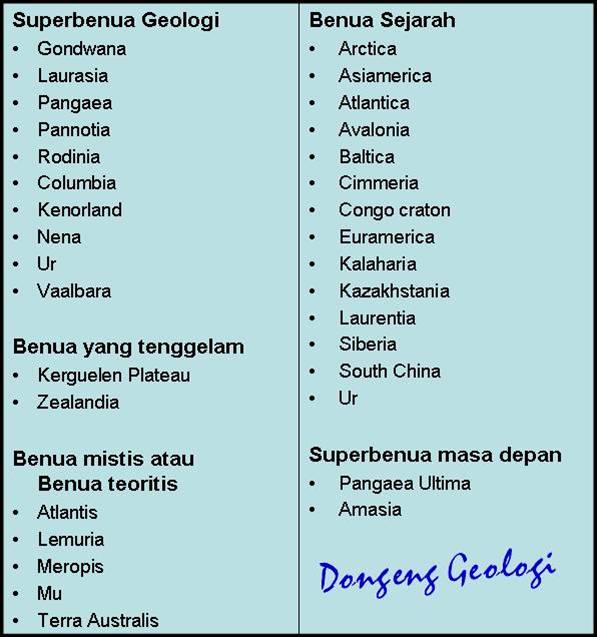
Continent geology
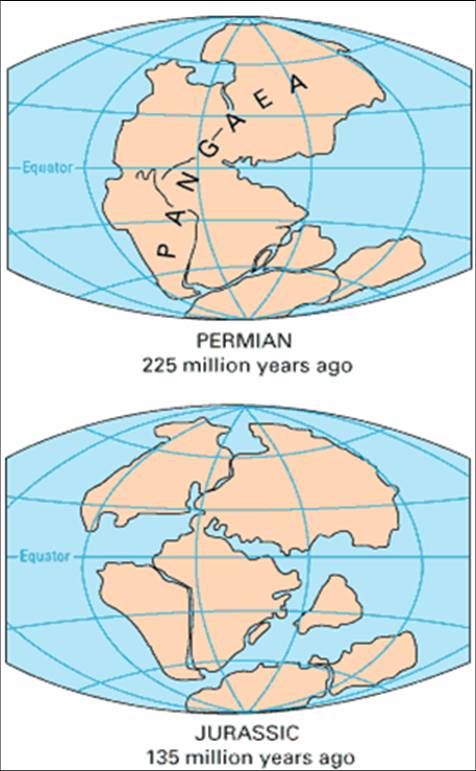
Pangaea Continent Super imaginable 225 years ago.
Pangea
Supercontinent Pangea is an old continent that is at 225 million years ago. Continent Pangea is the result of reconstruction of the continents that exist today that are returned into a single supercontinent consisting of crust-continental crust.Pangaea or Pangea (pan means all, whole and Gaia means Earth in Ancient Greek) is a huge supercontinent in Paleozoic and Mesozoic age of about 250-225 million years ago, before it finally splits or splits into several pieces of continents or plates and then spread to the entire surface of the earth.
Many theories explaining the "gathering" back these continents after previous adrift. The theory of plate tectonics is also familiar with such a cycle of movement of these continents apart-together-apart ... that occur repeatedly.
Supercontinent Pangea was eventually split into two into Gondwana and Laurasia.
Gondwana dan Laurasia
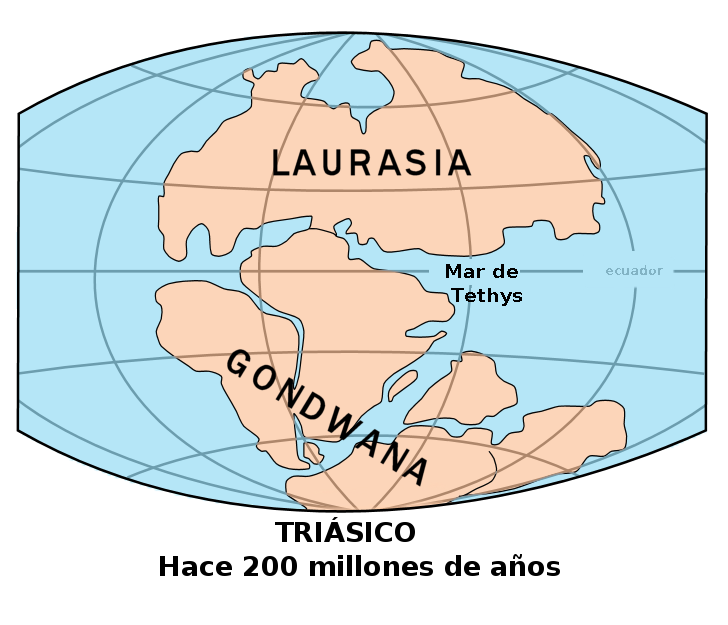
Gondwana dan Laurasia
Then a large block of land, currently known as the Indian subcontinent, broke away from the supercontinent during the Cretaceous (Cretaceous), beginning about 125 million years ago. Mainland following a break-away is now known as New Zealand, during the roughly 80 million years ago, followed by the Australian continental mainland and the island of Irian moving toward the north about 55 million years ago.
In addition to the above continents in the geological sciences are also known continents other continents such as:Geological continents over the continents are reconstructed based on the science of tectonics. Crust-continental crust is returned to its origin before it began to "wander" in the next stage. See the reconstruction of the continents are in the top picture.
Langganan:
Postingan (Atom)